
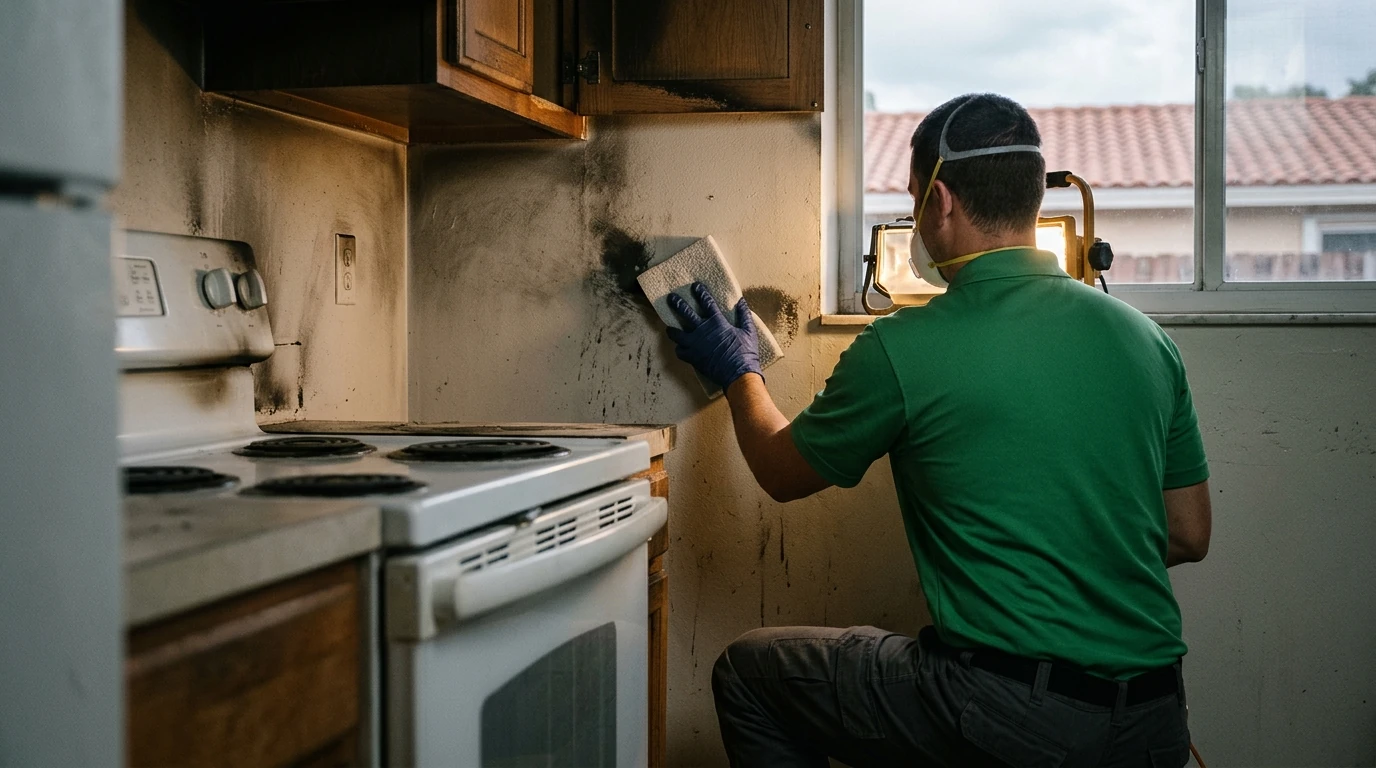
For soot removal after a fire in Davie, call RestorationXpress at (954) 932-5420. The company runs a 24/7 line, holds Florida contractor license #1057, and has earned a 4.9-star rating across 138 Google reviews for fire and smoke jobs across Broward County since 2011.
If you just put out a grease fire on the stove, or the fire department just left after a worse one, you’re probably staring at a black film on the cabinets and a smell that won’t go away. That residue isn’t a wipe-down job. Soot is an acidic, oily film that etches finishes and works itself deeper into drywall, grout, and insulation the longer it sits.
Who do you call first after a kitchen fire in Davie?
Call 911 first if the fire is still active or anyone needs medical attention. Once the fire department clears the home for reentry, call your insurer to open a claim, then call a fire and smoke restoration company, not a general house cleaner, to handle the soot and odor.
The fire department’s job ends once the home is safe to enter and utilities are confirmed stable. From there, the clock matters for your insurance claim and for the damage itself: most homeowners policies expect you to start mitigating damage promptly, and soot sets harder with every hour of Davie’s heat and humidity. If you want a walk-through of what to expect from the insurance side, our guide to filing a fire damage claim covers documentation and timing in more detail.
A general cleaning service isn’t equipped for this. Soot migrates into HVAC ductwork, upholstery, and porous building materials in ways a standard mop-and-wipe crew isn’t trained to track. Restoration technicians who train to the IICRC S700 standard for fire and smoke restoration assess which surfaces can be cleaned in place and which need to come out, something that matters as much for your fire damage restoration scope as for the smoke damage cleanup that follows.
Why shouldn’t you wipe soot off walls with a wet rag or vacuum?
Wiping soot with a wet rag or running a household vacuum smears the residue deeper into paint, drywall, and fabric, turning a surface stain into a set-in one that’s harder, and more expensive, to remove.
Dry soot from a protein fire (grease, food on the stove) behaves differently than the visible black soot from a structure fire or a furnace puffback. Protein soot is often nearly invisible on walls and cabinets but carries a strong, lingering odor that clings to everything in the kitchen. Wet it with a rag before it’s properly lifted, and it bonds to the surface instead of coming off.
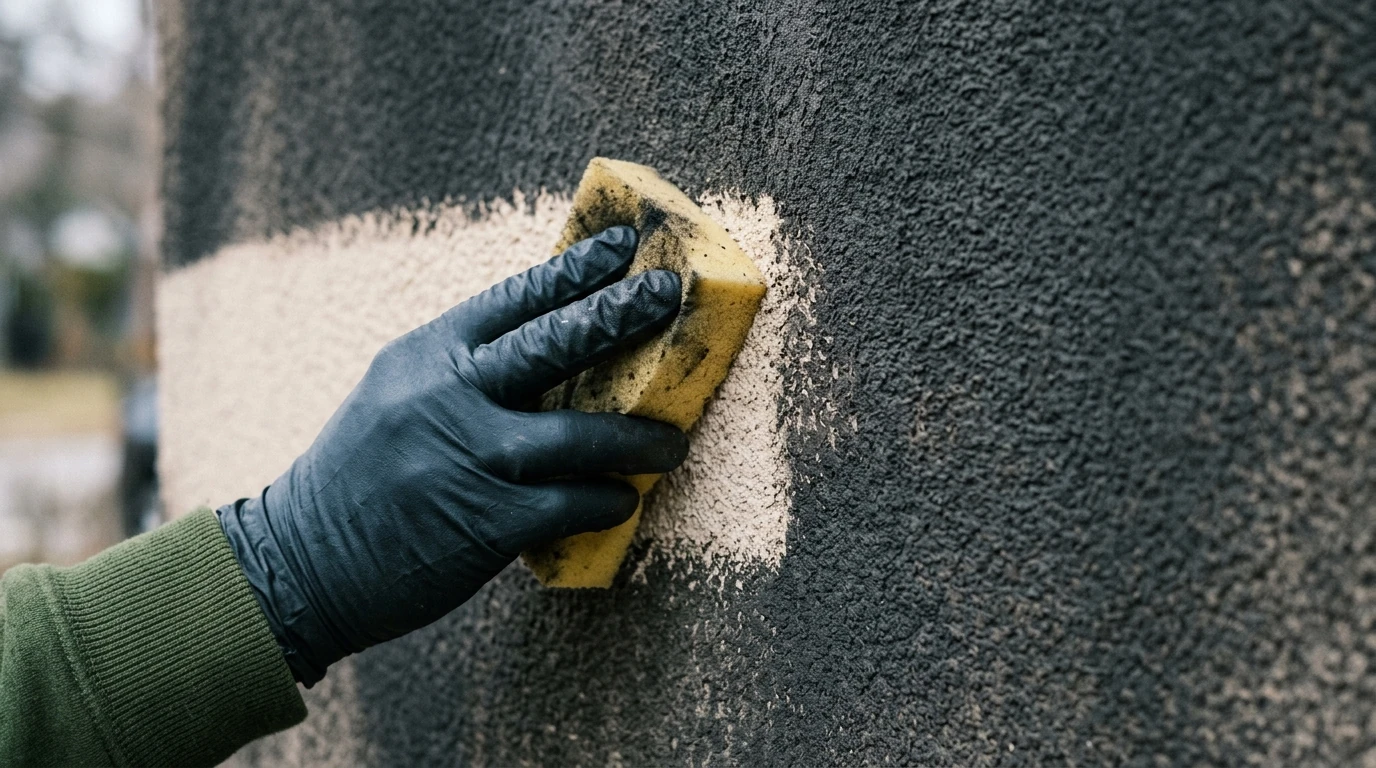
In older ranch-style homes around Rolling Hills and Shenandoah, textured stucco walls and popcorn ceilings are especially prone to trapping that film if the wrong method is tried first. Restoration crews start with dry chemical sponges to lift loose carbon without grinding it in, then move to wet cleaning only on materials that can tolerate it. A household vacuum also lacks the HEPA filtration to trap fine soot particles, so running one just recirculates them into the air you’re breathing.
What does a fire and smoke restoration crew do that you can’t do yourself?
A restoration crew assesses which surfaces can be cleaned in place versus which need to be removed, uses dry sponges and HEPA equipment matched to the soot type, then treats lingering odor only after the particulate is gone, something a standard cleaning service isn’t equipped or trained to do.
The general sequence looks like this:
- Assess and document the soot type, affected rooms, and odor source, with photos for the insurance file.
- Contain the area with poly sheeting and HVAC vent covers so soot doesn’t spread to clean rooms during cleanup.
- Dry-clean first, using chemical sponges on walls, ceilings, and trim before any wet cleaning touches the surface.
- HEPA vacuum and wet-clean washable surfaces; textiles and contents often get cleaned off-site.
- Treat odor with ozone or hydroxyl equipment once particulate is removed, not before, since treating odor over unremoved soot just masks it temporarily.
- Final walkthrough to confirm surfaces and air quality are clear.
For a more detailed walk-through of each phase, see our fire damage restoration process guide. If you’re trying to get a sense of cost before anyone arrives, our breakdown of soot removal costs in Davie covers typical price ranges by job size.
What should you do right now, before the crew arrives?
Leave soot-covered surfaces alone, run the AC on fan-only with the filter pulled to limit particles recirculating through the house, and don’t eat or use any food, dishes, or cookware exposed to the smoke until it’s been assessed.
Photograph the damage before you touch anything, including cabinets, countertops, and any items you’re tempted to toss. Keep windows closed if it’s hot and humid outside; pulling in outside moisture on top of smoke residue just adds a second problem. Don’t throw away damaged contents until your insurer or the restoration crew has had a chance to document them, since those photos and that inventory are what support your claim.
Soot sets harder into walls, cabinetry, and fabric with every hour it sits in Davie’s heat and humidity. Call for a soot and odor assessment at (954) 932-5420 before you reach for a rag or a vacuum.
Video Transcript
Your kitchen fire is out, but black soot now coats the cabinets, and that smell refuses to fade away at all. Call 911 first if anyone needs help, then call your insurer, and finally a licensed fire and smoke restoration company. Soot isn’t just dirt, it’s an acidic, oily residue that etches finishes and sinks deeper into drywall and grout. Resist the urge to wipe soot with a wet rag or vacuum, that only smears the residue deeper into paint and fabric. Grease fire soot can be nearly invisible on walls, yet it carries a strong odor that clings to everything nearby. Older homes with textured stucco walls and popcorn ceilings trap soot even faster if the wrong method is used first. A trained crew documents the damage, seals off clean rooms with plastic sheeting, and uses dry chemical sponges before any wet cleaning begins. HEPA vacuums and wet cleaning follow next, then odor treatment comes last, only after every bit of soot is removed. Before help arrives, run your AC on fan only, photograph everything, and don’t toss damaged items or eat exposed food. Soot sets harder every hour in Davie’s heat and humidity. Call RestorationXpress at (954) 964-6471 to schedule an assessment.