
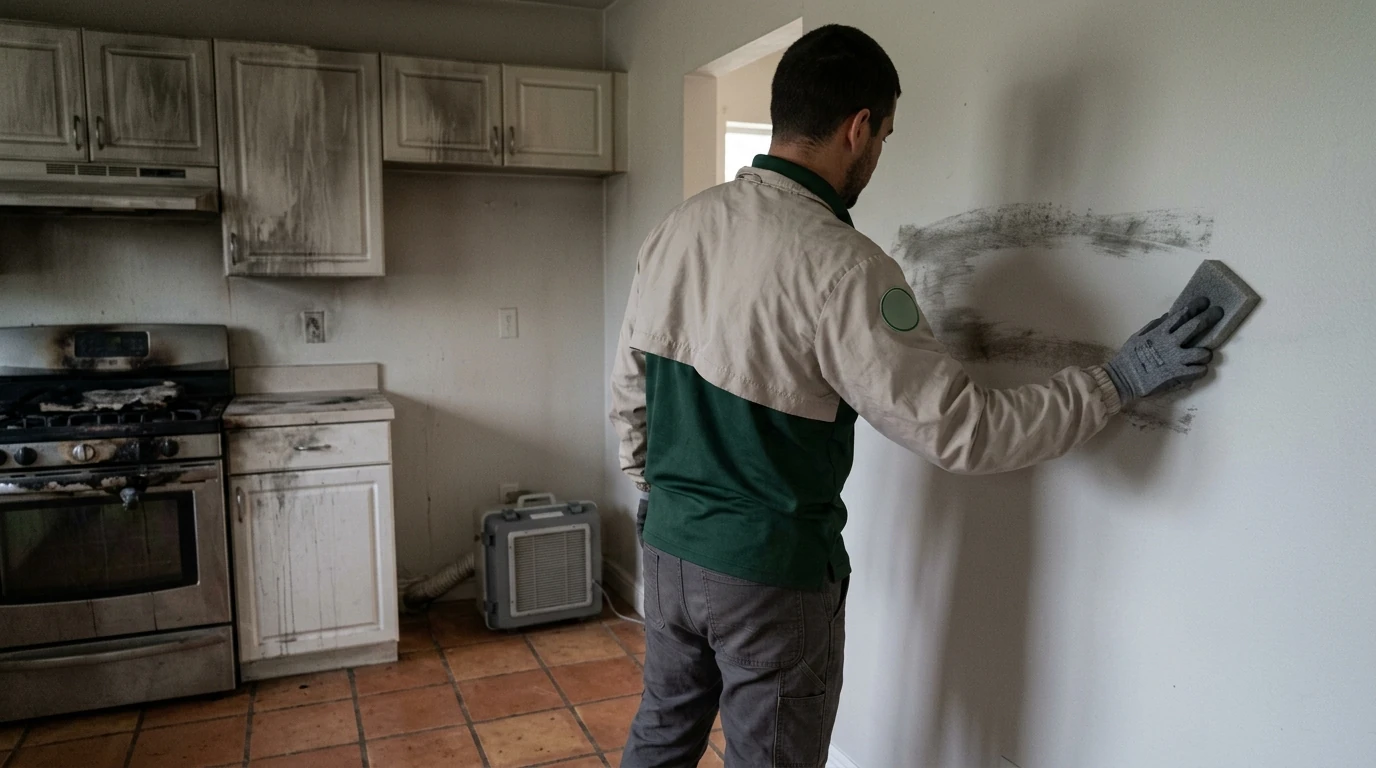
TL;DR: Soot removal after a fire in Davie, FL typically costs $300 to $8,000 depending on how much surface area is affected, whether the smoke was dry (easier to remove) or wet/protein-based (harder and costlier), and whether contents, ductwork, or odor treatment are part of the scope. A restoration company inspects the soot type first, then prices dry cleaning, wet cleaning, sealing, and odor removal as separate line items rather than one flat number.
If a grease fire on the stove left a gray film across your Rolling Hills kitchen, or smoke from a neighbor’s garage fire drifted through the HVAC system of your Pine Island Ridge condo, the soot is probably the part that worries you most once the flames are out. It clings to walls, cabinets, and fabric, and it keeps smelling like smoke long after the fire department leaves. Soot and smoke residue cleanup is priced separately from structural fire repairs, and the cost depends mostly on how much surface area is contaminated and how the soot behaves.
How Much Does Soot Removal Cost in Davie, FL?
Soot and smoke residue cleanup in Davie typically runs $300 for a single lightly-affected room up to $8,000 or more for a whole-structure fire with heavy, oily residue. Most jobs fall in the $1,000 to $3,500 range once wall washing, sealing, and odor treatment are added.
Pricing is usually broken into line items rather than one flat fee, since a kitchen grease fire and a whole-house electrical fire leave very different residue behind:
| Scope | Typical Cost Range |
|---|---|
| Light surface soot, one room (dry chemical sponge cleaning) | $300 - $800 |
| Moderate smoke residue, multiple rooms (wall washing, spot sealing) | $1,000 - $3,000 |
| Heavy soot after a structure fire (wet cleaning, full sealing/primer) | $3,500 - $8,000+ |
| Contents cleaning (furniture, textiles, ultrasonic or ozone treatment) | $500 - $2,500 per load |
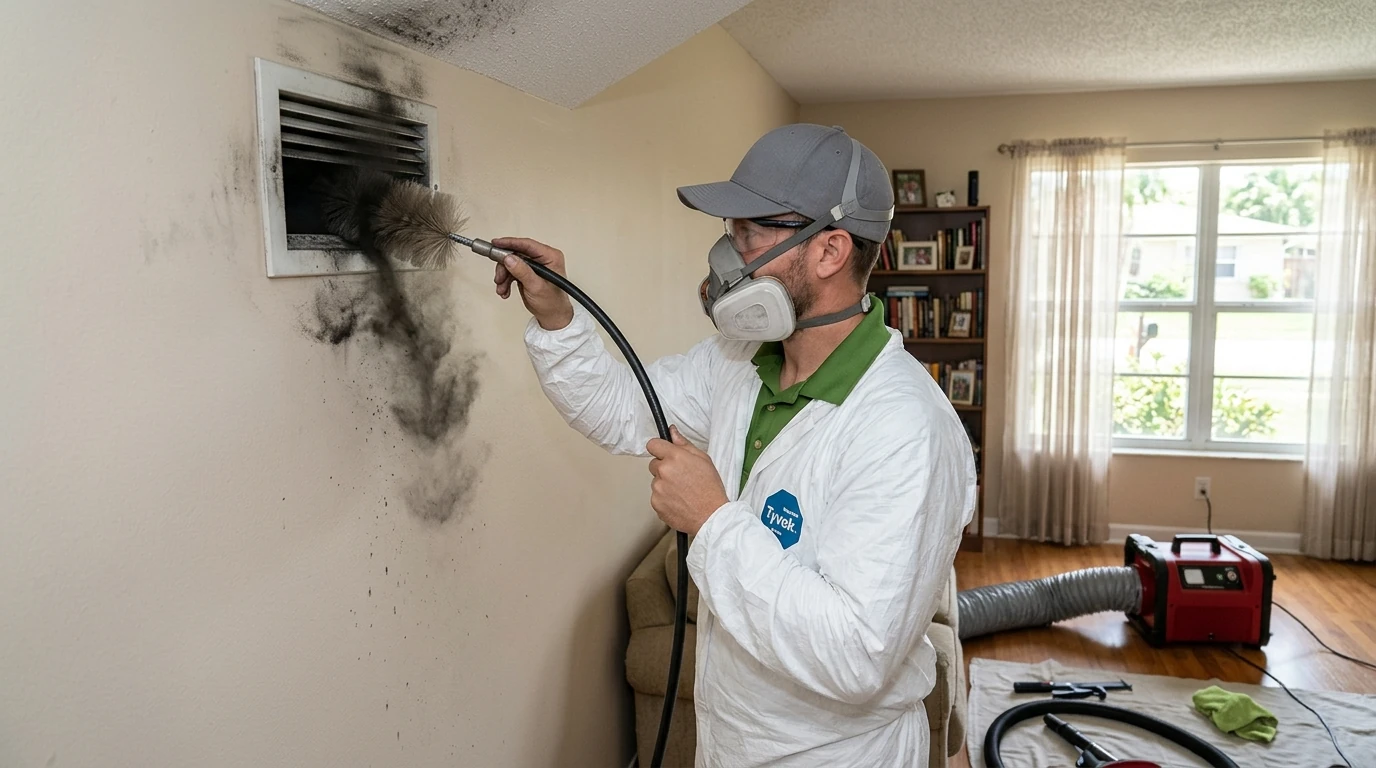
| HVAC duct cleaning after a fire | $450 - $1,200 |
| Odor treatment (thermal fogging or hydroxyl generator) | $300 - $1,500 |
These line items fall under smoke damage restoration rather than full structural fire rebuild work, which the fire damage restoration cost guide covers separately. These are typical South Florida industry ranges, not a quote. Every fire leaves a different mix of surfaces, materials, and soot types behind, so a reputable company inspects the property and provides a written, itemized scope before any cleaning starts.
What Drives the Price of Soot and Smoke Cleanup?
The biggest cost driver is the type of smoke residue, not square footage alone. Protein and plastic fires leave an oily, acidic film that’s expensive to remove; dry wood and paper fires leave a powdery residue that cleans up faster and cheaper.
- Fire source. Grease and plastic fires produce “wet smoke,” a sticky, smeared residue that penetrates grout, metal, and porous drywall. Wood and paper fires produce “dry smoke,” a powdery film that chemical sponges lift more easily.
- How long it sat. Soot is acidic. The longer it sits on metal fixtures, grout, or unfinished wood, the more it etches and discolors those surfaces, which can push a job from cleaning into replacement.
- Material porosity. Painted drywall, sealed cabinets, and tile clean up far cheaper than unsealed wood, carpet, or insulation, which often get removed rather than cleaned. When framing or insulation needs to come out and go back in, the work shifts into fire damage restoration or reconstruction rather than surface cleaning.
- HVAC involvement. If the air handler ran even briefly during the fire, soot gets pulled into the ductwork and keeps recirculating until the system is cleaned, which is priced as its own line item.
- Contents. Furniture, clothing, and electronics usually get cleaned offsite and billed separately from the structure itself.
Does Homeowners Insurance Cover Soot Removal in Florida?
Most standard Florida homeowners policies cover soot and smoke damage from a sudden, accidental fire, since fire is a named covered peril. You’ll typically pay your deductible, and the insurer covers the documented cleanup cost above that, per the Insurance Information Institute’s overview of covered disasters.
Adjusters pay based on a written, itemized scope that separates cleaning, sealing, contents, and odor treatment, so photograph every affected room before cleanup starts. Coverage specifics vary by carrier and policy, so confirm details with your adjuster. If you have a dispute with an insurer operating in Florida, the Florida Department of Financial Services Consumer Services division handles complaints and questions about carriers.
What Does the Soot Removal Process Actually Involve?
Professional soot removal follows the ANSI/IICRC S700 fire restoration standard: inspect and classify the residue, contain the area, then clean with dry or wet methods matched to the soot type before sealing and deodorizing.
- Inspection and pre-testing. A technician test-cleans a hidden spot to confirm whether the soot is dry or oily before committing to a method.
- Containment. Plastic sheeting isolates the affected area so soot doesn’t spread to clean rooms during cleaning.
- Dry cleaning. Chemical sponges lift dry, powdery soot off walls, ceilings, and trim without smearing it deeper.
- Wet cleaning. Degreasing agents break down oily, protein-based residue on surfaces that can handle moisture.
- Sealing. Surfaces that can’t be fully stripped of odor and stain, like exposed framing, get an odor-blocking primer before repaint.
- Contents and HVAC. Salvageable furniture and textiles go offsite for ultrasonic or ozone cleaning while ducts get vacuumed and scrubbed separately.
- Odor treatment and clearance. Thermal fogging or hydroxyl generators neutralize smoke odor at the molecular level, then a final walkthrough confirms no residual smell or visible residue.
When Should You Call a Professional Instead of Cleaning Soot Yourself?
Call a professional as soon as the fire department clears the property, because soot is acidic and keeps damaging metal, grout, and unsealed surfaces the longer it sits.
Wiping soot with a household rag or all-purpose cleaner usually smears it deeper into paint and drywall instead of lifting it, and it does nothing for odor trapped in your HVAC system or insulation. For more on why DIY odor fixes tend to fail, see how professionals remove smoke odor. If the fire also caused structural damage like burned studs or a compromised roof, you’re looking at a larger rebuild, and the fire damage restoration cost guide breaks down those numbers separately.
A written scope that separates cleaning, sealing, contents, and odor treatment line by line protects both your budget and your insurance claim. That’s how this Davie-based restoration team prices every soot and smoke job: scope first, work second. Call RestorationXpress at (954) 932-5420 for a same-day assessment anywhere in Broward County.
About RestorationXpress
Founded in 2011, this Davie, FL restoration company holds Florida license #1057 and carries a 4.9-star Google rating across 138 reviews. The team works 24/7 across Broward County on fire and smoke damage restoration, water damage, mold remediation, storm damage, and flood restoration, documenting every job with photos and a written scope before work begins. This guide was written with the company’s team, led by Jaziel Nahum.