
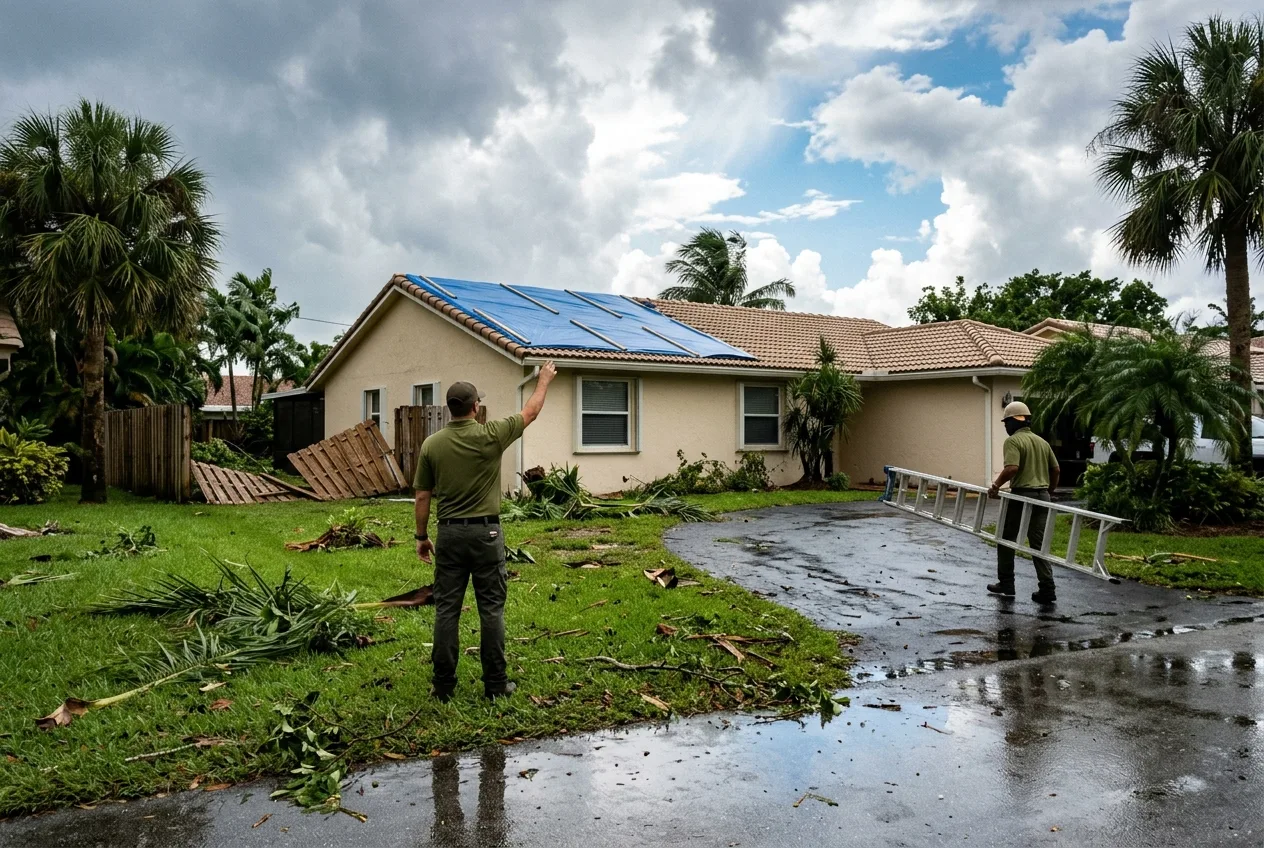
Storm Damage Restoration in Fort Lauderdale
Storm damage restoration in Fort Lauderdale, FL. Insurance billing accepted. Call (954) 932-5420.
Our technicians are dispatched from our Davie, FL headquarters and are typically on-site in Fort Lauderdale within 60 minutes of your call.
Fort Lauderdale sits at the crossroads of Atlantic storm tracks and Broward County’s flat, low-lying terrain, a combination that turns a single hurricane or fast-moving tropical system into a multi-front damage event. When a storm tears through the waterfront neighborhoods along Las Olas Isles or pushes surge water into the older bungalows of Victoria Park, the damage rarely stops at a broken window or a missing roof panel. Wind, water, and debris work together, and the clock starts the moment the rain stops.
Why Fort Lauderdale Properties Face Distinct Storm Damage Challenges
The city’s geography makes storm damage here different from what you’d see inland. Much of Fort Lauderdale, ZIP codes like 33301 and 33316 near Port Everglades, sits within a few feet of sea level. Soil saturation happens fast, and once the ground is full, there’s nowhere for stormwater to drain. That standing water migrates under slab foundations, into crawlspaces, and through the weep screed of stucco exteriors before most homeowners realize the structure itself is absorbing moisture.
The housing stock adds another layer of complexity. Coral Ridge and Rio Vista are lined with mid-century concrete block homes built before modern wind-load codes. Those walls are durable in many ways, but their older window and door assemblies, and the original single-ply roofing systems many still carry, are far more vulnerable to Category 1 and 2 wind speeds than newer construction. A storm that causes cosmetic damage to a 2015 build can drive water deep into a 1962 block home through gaps that aren’t visible until you pull the drywall.
Our Storm Damage Restoration Process in Fort Lauderdale
Every job starts with a thorough structural and moisture assessment before any debris is moved or materials are removed. Wind-driven rain hides in wall cavities, attic decking, and under flooring, especially in homes near Hugh Taylor Birch State Park where mature tree canopy means more roof punctures and debris impact than in open neighborhoods. We use thermal imaging and calibrated moisture meters to map the full extent of water intrusion, not just the visible wet spots.
From there, the process moves in a deliberate sequence:
- Tarping and board-up to stop additional water entry through compromised roofs, broken windows, and damaged siding
- Controlled water extraction from flooring, wall assemblies, and any below-grade spaces
- Structural drying using industrial air movers and dehumidifiers sized to the actual cubic footage of the affected area, not a one-size-fits-all setup
- Debris and tree removal coordination for fallen limbs and canopy damage, which is common along the residential streets running off Las Olas Boulevard
- Damage documentation with photographs, moisture readings, and written scope of loss for insurance submission
We don’t close out a job until moisture readings return to normal baseline levels for South Florida’s ambient humidity, a standard that matters more here than in a dry climate, because elevated readings that would be acceptable in Phoenix indicate active moisture problems in Broward County.
Fort Lauderdale Insurance Coordination
Storm claims in Florida move through a specific process, and documentation quality directly affects settlement outcomes. We photograph affected materials before removal, log moisture readings with timestamps, and produce a written scope that aligns with the line-item format most carriers use. Homeowners in flood-prone areas near the Intracoastal often carry both standard homeowners policies and separate NFIP flood policies, we help clarify which damage category applies to which policy so nothing falls through the gap between the two.
For properties in HOA-governed communities, we’re familiar with the additional approval steps some associations require before exterior repairs begin. If your community has architectural review requirements, factor that into your timeline and let us know early, we can provide documentation that satisfies most HOA review boards without delaying the interior drying work.
Reaching Fort Lauderdale from Davie
RestorationXpress is based in Davie, which puts us a short drive from most Fort Lauderdale neighborhoods via I-595 east or Griffin Road to US-1. Neighborhoods like Colee Hammock and Victoria Park are typically reachable without navigating the heavier traffic corridors that slow response from more distant providers. Call (954) 932-5420 to confirm scheduling and get a crew en route.
Local Note
One thing that catches out-of-area contractors working Fort Lauderdale storm jobs: the city’s canal-laced street grid means some waterfront properties on the isles and finger canals, particularly in Las Olas Isles, have very limited staging space for equipment trucks and dumpsters. Narrow lot frontages and seawall setbacks can make it impossible to position a large roll-off container without blocking the only access point. We account for this during the initial site visit, sometimes coordinating with the city’s right-of-way permitting office before equipment arrives, so the job doesn’t stall on day one over a logistics problem that was predictable from the address.
If your Fort Lauderdale home or commercial property took storm damage, call RestorationXpress at (954) 932-5420. We serve properties across Broward County and understand the specific conditions, the soil, the housing stock, the insurance landscape, that make storm recovery here its own discipline.
Serving Fort Lauderdale from our Davie headquarters — ★ 4.9 · 132 Google reviews
“I highly recommend this restoration company! They did an outstanding job repairing and restoring my bathroom. From start to finish, the team was professional, reliable, and courteous. They kept me informed throughout the process, showed up when they said they would, and paid close attention to…” — Jonathan, July 2026
Storm Damage Restoration in Fort Lauderdale: Service Coverage
Frequently Asked Questions
How fast can you arrive for storm damage restoration in Fort Lauderdale?
Are waterfront homes in Las Olas Isles at higher risk for structural damage after a hurricane than inland Fort Lauderdale properties?
How does Fort Lauderdale's flat terrain affect how quickly storm water enters a home?
What's the typical drying timeline for a mid-century concrete block home in Coral Ridge after storm water intrusion?
Does Fort Lauderdale require permits for storm damage repairs, and does that slow down the restoration work?
We have both a homeowners policy and a separate flood policy — how do you document storm damage so both claims are handled correctly?
Will my homeowners insurance cover storm damage restoration in Fort Lauderdale?
Storm Damage Restoration response in Fort Lauderdale
Most Fort Lauderdale calls see a technician on-site within 60 minutes from our Davie headquarters.